
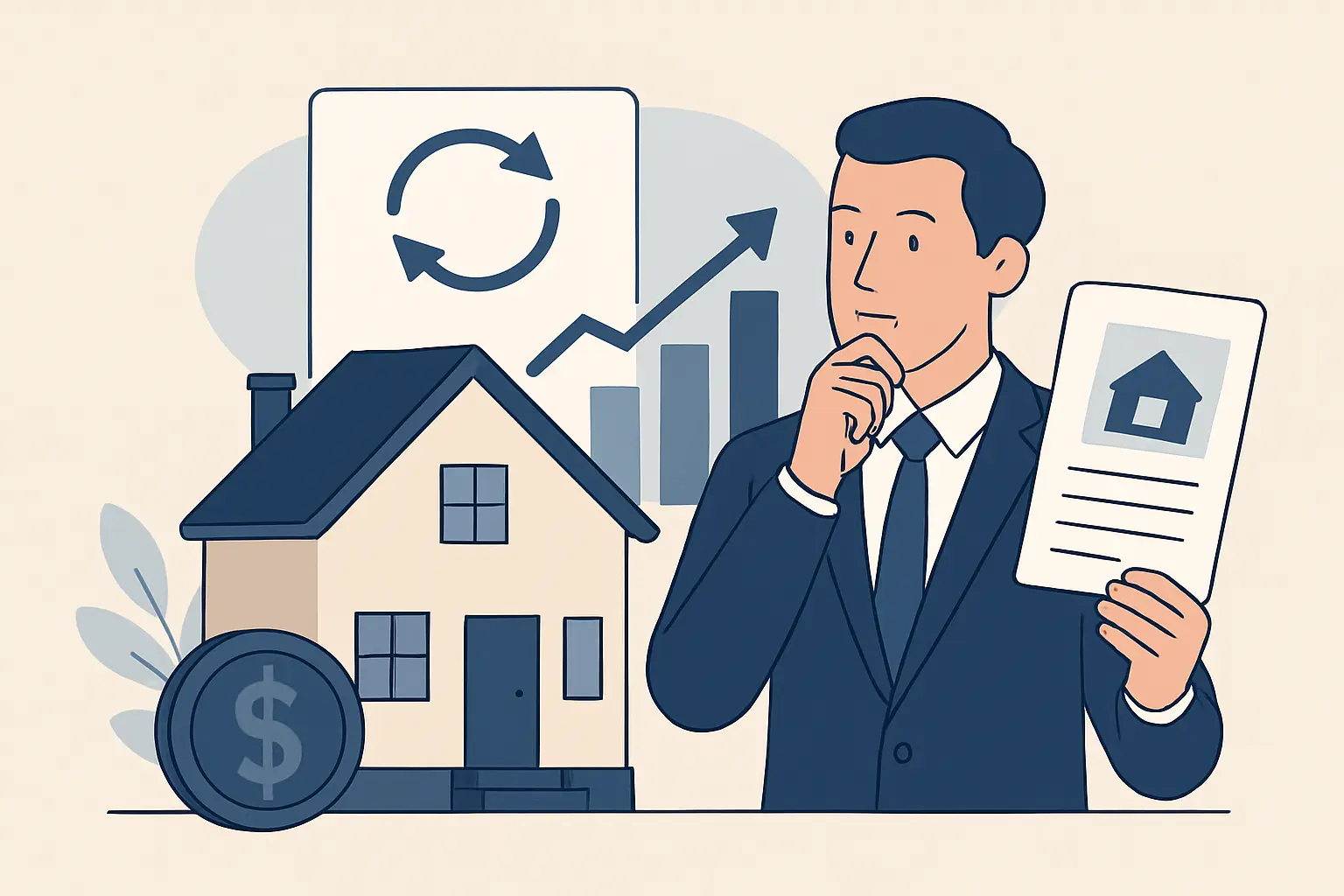
If your monthly payment makes you wince every time it drafts, you are already asking the right question. Refinancing is not just “getting a lower rate.” It is a reset of your mortgage terms, costs, and timeline – and it can be a smart move or an expensive detour depending on your timing.
The best refinance decisions usually come from two things: a clear goal (save monthly cash flow, pay off faster, tap equity, remove risk) and clean math (total costs vs. total benefit over the time you will keep the loan). Below is a practical way to decide when should i refinance my mortgage – without guesswork, and without letting a headline rate make the decision for you.
Start with the “why” before the “rate”
Most borrowers start by shopping interest rates. That is understandable, but your goal should drive the structure.
If your priority is a lower payment, you may accept a longer term or choose credits that slightly increase the rate but reduce cash needed at closing. If you want to be debt-free sooner, you might refinance into a shorter term and keep your payment similar, using the lower rate to accelerate principal payoff. If you are consolidating higher-interest debt, the rate matters, but so does discipline – rolling credit card debt into a mortgage can help, but only if you stop rebuilding the balances.
The “right time” to refinance is usually when the new loan fits your goal and you can reasonably keep it long enough to come out ahead.
When should i refinance my mortgage for a lower rate?
A lower rate is the most common reason to refinance, but the timing is about break-even, not bragging rights.
Think in break-even months, not rate drops
Refinancing has costs. Sometimes they are paid upfront, sometimes rolled into the loan balance, and sometimes offset by lender credits. Either way, they are real.
A simple break-even calculation is:
Break-even months = Total refinance costs ÷ Monthly savings
If refinancing costs you $4,000 and you save $200 per month, your break-even is 20 months. If you are likely to sell the home, refinance again, or move within a year, that refinance probably does not pay for itself.
The rate drop that “makes sense” varies by loan size and costs, but as a practical benchmark many homeowners start seeing meaningful savings around 0.75% to 1.00% lower than their current rate. That is not a rule. On a large balance, a smaller drop can still be worthwhile. On a small balance with high closing costs, even a full percentage point may not move the needle enough.
Watch what changes besides the rate
Two loans can have the same rate and very different outcomes.
Loan term matters. Refinancing from year 8 of a 30-year loan back into a new 30-year can reduce payments, but it can also increase total interest paid over the life of the loan. If your goal is long-term savings, consider a 20-year or 15-year option, or keep making your old payment amount even if the new required payment is lower.
Also pay attention to mortgage insurance. If you currently pay PMI and refinancing would remove it (because your equity is now above 20%), your savings could be substantial even if the rate change is modest.
Refinance timing when your credit has improved
Your interest rate is priced off risk factors, and credit score is a major one. If your score is materially higher than when you got the current mortgage, refinance becomes more compelling.
This often happens after:
- A few years of on-time mortgage payments
- Paying down credit card balances (lower utilization)
- Clearing a past credit event that has aged
If you suspect your credit profile is better now, it is worth pricing out options even if rates have not dramatically fallen. A better score can also improve your pricing on points and lender credits, which affects the break-even math.
When you need to change the loan type (ARM to fixed, or the reverse)
Rate is only one part of risk. Another part is predictability.
If you have an adjustable-rate mortgage (ARM) and your fixed period is ending, you are approaching a decision point. If you value consistent budgeting, refinancing into a fixed-rate loan can reduce payment shock and give you certainty.
On the other hand, some borrowers choose an ARM when they are confident they will move within a defined time horizon and want a lower initial rate. That can be rational – but it should be matched to your real plans, not optimistic assumptions.
A refinance is well-timed here when it reduces a risk you do not want to carry, even if the rate is not the absolute lowest you have ever seen.
When you want to remove PMI or restructure equity
PMI is one of the cleanest reasons to refinance because the savings can be immediate.
If your home has appreciated and your loan balance has dropped, you may have crossed the 80% loan-to-value threshold. Refinancing can replace your current loan with a new one that does not require PMI. Some loans can remove PMI without a refinance, but that depends on the loan type and the specific rules, so it is worth checking rather than assuming.
Similarly, if you have a second mortgage or HELOC and want a cleaner structure, a refinance can consolidate loans, simplify payments, and potentially improve overall pricing.
When you need cash and have a disciplined plan
A cash-out refinance increases your loan balance to access equity as cash at closing. The timing is “right” when you have a high-confidence use for the funds and the new payment still fits comfortably.
Good reasons tend to be investments in the home or financial stability: renovating to improve livability, funding necessary repairs, or consolidating higher-interest debt with a clear payoff plan. Riskier reasons are lifestyle spending or using home equity to cover an ongoing budget gap. If the cash solves a temporary issue but creates a long-term payment strain, it is not a win.
Also understand the pricing trade-off: cash-out refinances often carry slightly higher rates than a standard rate-and-term refinance. That does not mean you should avoid them. It just means you should price it accurately and compare against alternatives like a HELOC.
When life changes, your mortgage should keep up
Refinancing is not only about markets. It is also about life.
If your income has increased and you want to accelerate payoff, a shorter-term refinance may fit. If you recently had a child and want more monthly breathing room, extending the term or adjusting the structure might reduce stress. If you are going from dual income to one income, lowering the required payment can be a risk-management move.
Timing is less about “perfect” rates and more about aligning your mortgage with what your household needs now.
Costs and friction that can make refinancing a bad idea
Refinancing is not free, and it is not always available on favorable terms.
Closing costs typically include lender fees, appraisal, title services, recording, and prepaid items like interest and escrow setup. Even when lenders advertise “no-cost” refinancing, the costs are usually covered through a higher rate or rolled into the balance. That can still be a smart deal – you just want the trade-off stated clearly.
There are also situations where refinancing often disappoints:
- You will sell or move before break-even.
- Your current loan has an unusually low rate and you are considering a reset to a much higher market rate just to take cash out.
- Your home value is uncertain and an appraisal might come in low, shrinking the benefit.
- Your debt-to-income ratio has increased, limiting approval or pushing pricing higher.
None of these automatically stops a refinance, but they should slow the process down and force more careful math.
A simple decision process that keeps you in control
Refinancing gets easier when you treat it like a short underwriting project rather than a vague shopping exercise.
First, get your current facts: loan balance, current rate, remaining term, and whether you pay PMI. Then decide what you want most: lower payment, faster payoff, cash out, or more stability. Next, request quotes that show both rate and total costs, plus the monthly payment and the cash needed at closing.
Finally, run the break-even months and sanity-check your time horizon. If you are likely to keep the home and the loan longer than the break-even point, refinancing is often worth it. If you are not, you may be better off making extra principal payments, requesting PMI removal, or choosing a credit-heavy structure that lowers cash at closing.
If you prefer a guided process where someone compares multiple lenders, explains the trade-offs in plain language, and manages the paperwork end-to-end, a broker can take a lot of weight off your shoulders. One example is Credific Finance, known for high-touch support and access to a wide lender panel – the kind of setup that helps you pressure-test options without spending your week chasing banks.
A refinance should feel like a clean upgrade, not a gamble. If the numbers work and the new loan fits the life you are actually living, the timing is usually right – and you will feel that confidence long after the closing documents are signed.