
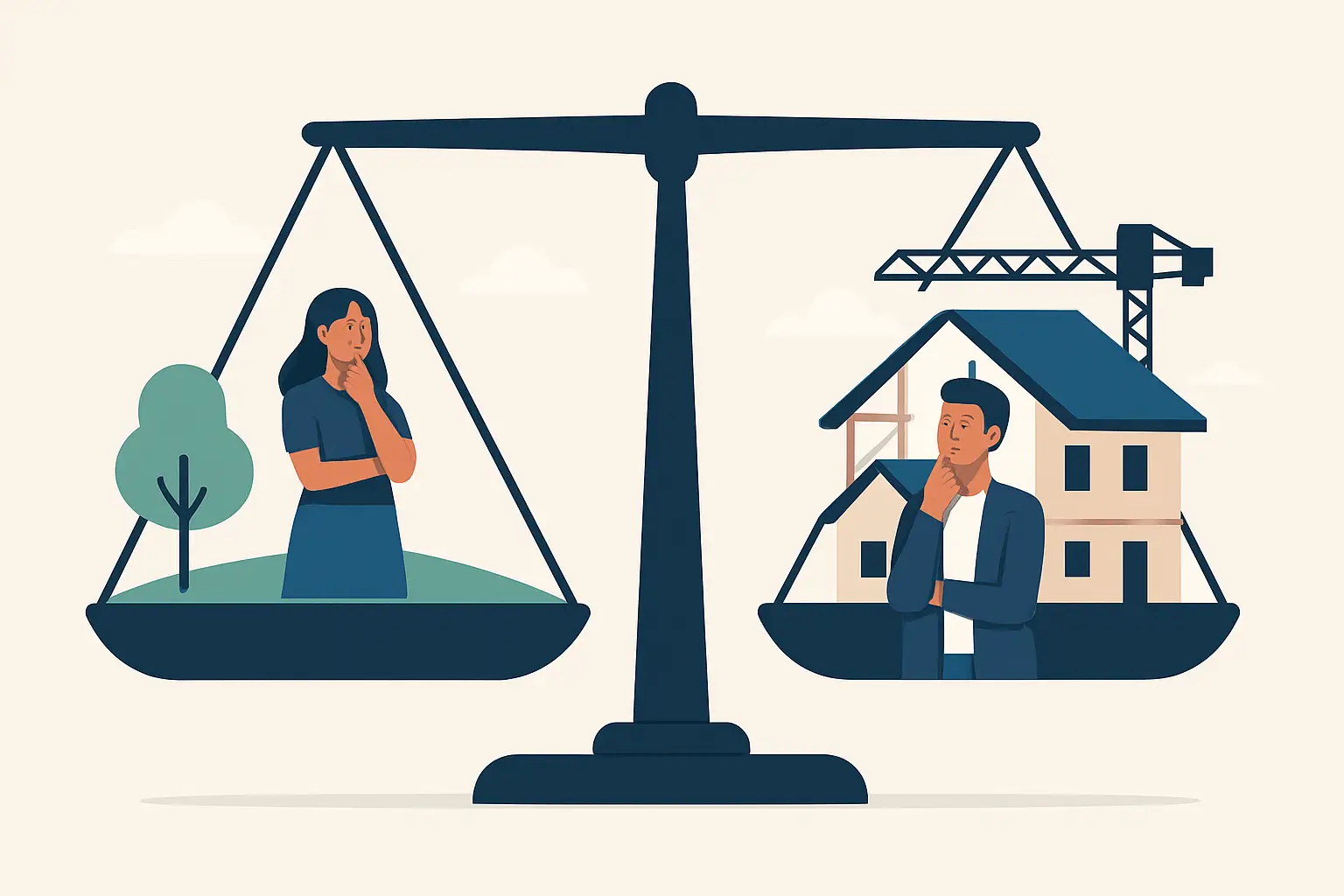
You’ve found the lot. It’s the right street, the right school district, the right commute. Then a lender asks the question that changes everything: are you financing just the land, or the land plus the build?
That’s the real fork in the road with land loan vs construction loan. They’re built for different risks, different timelines, and different borrower profiles. Choose the wrong one and you can end up juggling deadlines, higher cash requirements, or a stressful “we need an extension” call when you thought the hard part was over.
Land loan vs construction loan: the core difference
A land loan finances the purchase of the vacant lot. That’s it. No framing, no slab, no builder payments. You close, you own the land, and you make payments based on the terms of that loan.
A construction loan finances the build itself (and sometimes the land too, depending on how it’s structured). Instead of handing you one lump sum at closing, the lender releases funds in stages as the home is built. That stage-based release is called a draw schedule.
The reason lenders separate these products is simple: vacant land is harder to value and harder to sell if something goes wrong, while construction lending adds the moving parts of budgets, inspections, contractor performance, and timelines. Different risk, different rules.
When a land loan makes sense
A land loan is typically the cleanest fit when your land purchase and your build are not happening on the same calendar.
Maybe you want to secure a lot in a fast-moving market but you’re not ready to commit to a builder. Maybe you’re waiting on design approvals, zoning confirmations, or utilities. Maybe you plan to hold the land as an investment, or you want time to save more cash before breaking ground.
Land loans can be straightforward in concept but stricter in practice. Many lenders ask for larger down payments on land than they would on a finished home, especially if the property is rural, unusually shaped, lacks road access, or has limited utility hookups. The lender is thinking: “If I had to resell this land, how quickly could I do it and at what price?”
A land loan can also be a good fit if you want maximum flexibility on the build. With land already owned, you can shop builders later, adjust your plans, or delay construction without asking the lender for repeated extensions.
When a construction loan makes sense
A construction loan is designed for borrowers who have a defined path from dirt to done.
If you already have plans, a signed contract with a licensed builder, and a realistic start date, a construction loan can align financing to the actual pace of work. You’re not paying interest on money you haven’t used yet. Instead, you pay interest on the amount that’s been drawn so far.
Many construction loans are intended to convert to a traditional mortgage once the home is complete (often called construction-to-permanent). The big benefit is sequencing: you can finance the build in a way that matches inspections, progress payments, and occupancy timing.
The trade-off is that construction loans are paperwork-heavy by nature. Lenders want to see your full budget, contractor documentation, plans and specs, insurance, and a clear draw schedule. They’ll also want contingency planning for cost overruns, because overruns are common even with excellent builders.
Approval standards: why land is treated differently
With land, the collateral is a vacant lot. There’s no home to rent out, no home to move into, and fewer comparable sales in many areas. That uncertainty tends to push lenders to protect themselves with lower loan-to-value ratios and more conservative underwriting.
With construction, the lender is funding a project that (if completed) becomes a standard residential property, which is easier to value and resell. But the lender takes on completion risk – what happens if the builder disappears, materials spike, or the job stalls? That’s why construction approvals often feel like a “project review” as much as a credit review.
In both cases, your credit profile and income documentation matter, but the property and the plan matter more than most borrowers expect.
Down payments and cash planning: the part people underestimate
For many buyers, the decision between land loan vs construction loan comes down to cash flow.
Land loans often require more money down. Even if you qualify, you may not like what the lender is willing to do at the top end. If your goal is to preserve cash for plans, permits, and a construction contingency, a land loan’s down payment requirement can feel like it’s competing with your building budget.
Construction loans can be more efficient if they allow you to roll land and build into one package, or if your lender recognizes equity in land you already own. But construction lenders also expect you to have reserves. They want to know you can handle carrying costs and surprises without the project stopping midstream.
The most practical question to ask early is: “After closing costs and down payment, how much liquidity will I have left for upgrades, site work, and unexpected change orders?” If that number is thin, the “cheapest” option on paper can become the most stressful option in real life.
How construction draws work (and why it matters)
A construction loan is typically released in phases tied to milestones – for example, site prep, foundation, framing, mechanicals, drywall, and completion. Each draw is usually triggered by an inspection or verification that work is complete.
This protects you and the lender, but it also creates timing pressure. Builders often want to be paid quickly so they can schedule trades and order materials. If your lender’s draw process is slow, it can delay work. If inspections get backed up, it can delay draws. And if the builder’s invoice doesn’t match the lender-approved budget line items, it can trigger questions.
This is one reason borrowers benefit from a guided process. A well-managed application and clear documentation reduce “back and forth” when every day matters.
Interest rates and payment structure: what to expect
Rates vary widely by lender, market, credit profile, and property type, so it’s risky to assume a land loan will always be higher or a construction loan will always be lower. That said, land loans commonly price with a risk premium because the collateral is less liquid.
Payment structure is also different. Land loans often look like a traditional mortgage: you borrow a lump sum and make regular payments.
Construction loans are commonly interest-only during the build, because the outstanding balance increases as draws are made. That can help monthly cash flow during construction, but the payment will change as the loan balance changes, and it will change again when the loan converts to a permanent mortgage.
If your household budget is tight, that variability matters. It’s worth modeling payments at each stage, not just the final mortgage amount.
Timing, permits, and “what if we’re not ready?” scenarios
A land loan is forgiving on timeline. You can hold the lot while you finalize architecture, HOA approvals, or permitting.
A construction loan is less forgiving. Lenders typically expect construction to start within a defined window and finish within a defined term. If you’re building in an area with slow permitting, weather risk, or supply constraints, you’ll want to discuss extension policies and documentation requirements upfront.
It also depends on your builder selection. Custom builds with detailed specs can be more vulnerable to delays. Production builders can be faster, but change orders and availability still happen.
If you’re not confident you can start promptly, buying the land first may reduce pressure, even if the land loan costs more in the short run.
Common paths borrowers take (and where they get stuck)
Many borrowers start with a land loan and later refinance into a construction loan once plans are approved and the builder contract is signed. This can work well, but you should plan for two closings, two sets of lender fees, and potentially two appraisals.
Another common path is a single construction-to-permanent loan that includes the land purchase. This can reduce duplicated costs and keep the project under one lender relationship, but it requires you to be “construction-ready” sooner.
Where people get stuck is in the middle: they buy land assuming construction financing will be easy later, then discover the lender wants different documentation, a larger contingency, or a different builder structure than they expected. The earlier you align lender requirements with your build plan, the fewer unpleasant surprises you’ll face.
How to choose the right loan for your build plan
If you’re deciding between land loan vs construction loan, focus on three realities: your timeline, your certainty, and your cash.
If you have a lot picked out but you’re still choosing a builder, finalizing plans, or waiting on permits, a land loan can buy you time and control. You’ll likely need a stronger down payment, but you avoid forcing a construction schedule before you’re ready.
If you have plans, a reputable builder, and a clear start date, a construction loan can match funding to progress and keep your cash working more efficiently. You’ll need to be organized, responsive, and comfortable with lender oversight and draw inspections.
If you’re on the fence, the best move is not guessing – it’s mapping your actual steps from purchase contract to certificate of occupancy, then matching the loan structure to that sequence.
If you want a broker-led process, Credific Finance (https://www.credificfinance.com.au) helps borrowers compare options across a wide lender panel and manages the paperwork and lender coordination end-to-end so the financing doesn’t become the bottleneck.
The closing thought that saves people the most stress is this: treat your financing like part of the build plan, not something you’ll “sort out later.” When the loan structure matches your real timeline, the rest of the project feels lighter.