
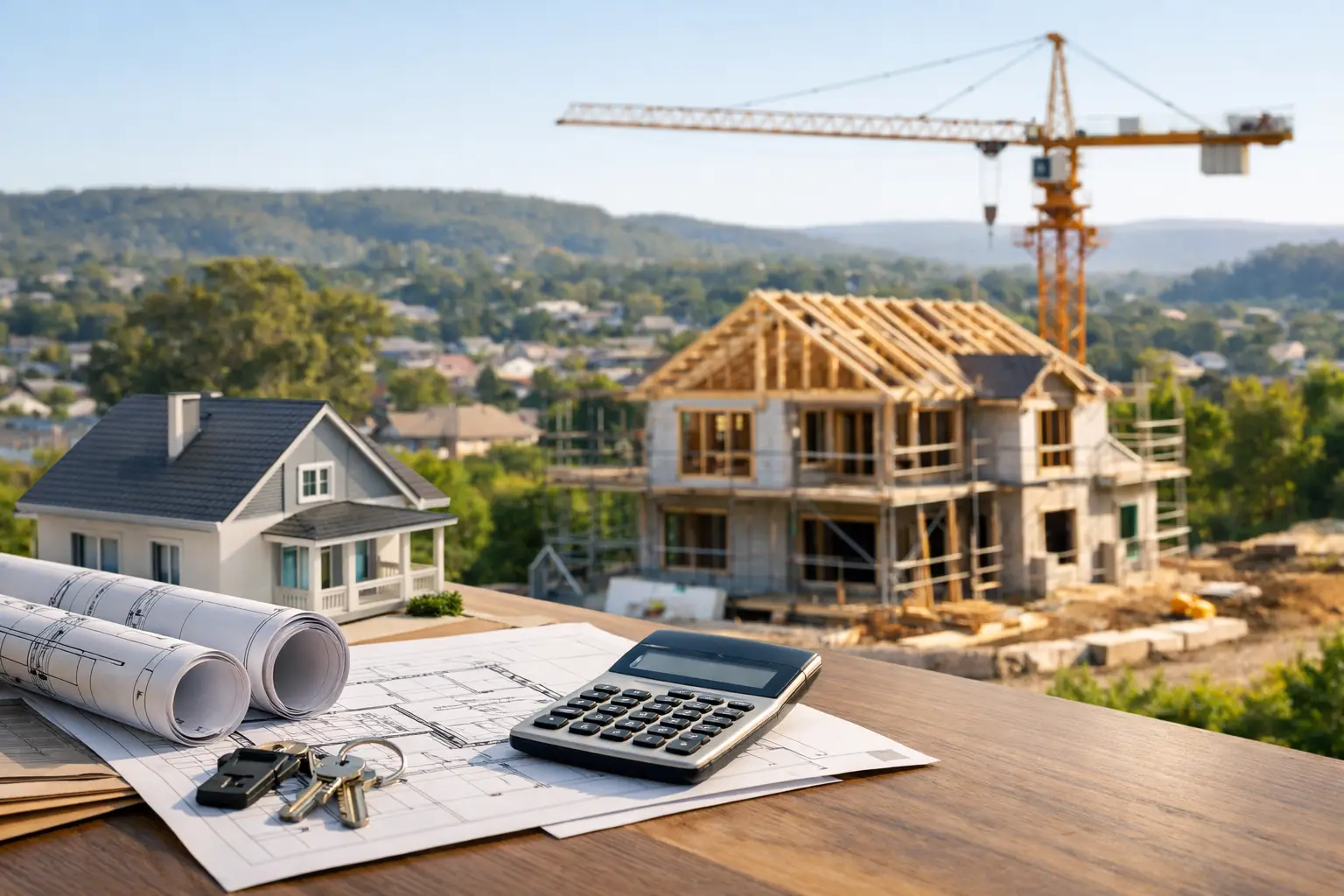
Building in the Hills District looks straightforward on paper until the numbers start moving. The land contract, the build contract, site costs, valuation timing, progress payments, and lender conditions all have to line up. A good construction loan guide for building your dream home in Hills District should do one thing well: help you understand the process before small mistakes become expensive delays.
For most borrowers, a construction loan is less about finding any lender and more about structuring the loan properly from day one. That matters even more in areas like Kellyville, Box Hill, Rouse Hill, and Castle Hill, where land estates, knockdown rebuilds, and custom homes often come with different council, builder, and valuation considerations. If you get the setup right early, the build phase is usually far less stressful.
How a construction loan works in the Hills District
A construction loan is different from a standard home loan because the funds are released in stages rather than all at once. Instead of borrowing the full amount at settlement and starting full repayments immediately, the lender generally advances money as the build progresses. Those stages often include deposit, slab, frame, lock-up, fit-out, and completion.
During construction, many borrowers make interest-only repayments on the amount drawn down so far. That can help with cash flow while you are paying rent, covering holding costs on land, or managing extras that come up during the build. Once the home is complete and the loan converts to a regular mortgage, principal and interest repayments usually begin unless another structure has been approved.
This staged funding approach protects both the lender and the borrower, but it also means documentation matters more. The lender wants a fixed-price building contract, detailed plans and specs, council-approved plans where required, builder details, insurance, and a valuation that supports the total project.
Construction loan guide – building your dream home in Hills District starts with the right budget
The biggest trap in construction finance is assuming the build contract price is the full cost of the project. It rarely is. Even with a fixed-price contract, many builds in the Hills District involve site-related costs, upgrades, landscaping, driveways, fencing, retaining walls, and utility connections that can stretch the budget beyond the builder’s headline number.
Sloping blocks can increase excavation and retaining costs. Newer estate areas may have design guidelines or timing requirements that affect your planning. Custom homes can also introduce more variation risk than project builds. None of this means you should avoid building. It means your finance strategy should leave room for what is realistic, not just what looks neat on the first quote.
A strong application usually includes a buffer. Lenders like to see that you are not running the project with no margin for movement. Borrowers who keep some savings aside after contribution often put themselves in a stronger position than those who use every available dollar on upfront costs.
What lenders look at before approving a construction loan
Approval comes down to more than income and deposit. Lenders are also assessing the quality of the project itself. They want confidence that the home can be completed on time, on budget, and at a value that supports the loan.
That means they will review your income, liabilities, credit history, savings position, and overall borrowing capacity. They will also look closely at the land value, the proposed construction cost, the builder’s credentials, and the contract terms. If the valuation comes in lower than expected, you may need to contribute more funds or revise the scope.
The builder matters. Many lenders prefer licensed builders with solid track records and standard form contracts. Owner-builder applications are possible with some lenders, but they are usually more restrictive and can require a larger deposit, more documents, and stronger financials.
Pre-approval can be useful, especially if you are buying land first and building later, but it is not the same as full construction approval. The full approval generally cannot happen until the lender has reviewed the final build documents.
Land purchase first, build later, or one package?
There is no single best path. It depends on timing, cash flow, and how certain you are about the build.
Some borrowers buy land first and organize the construction loan later. That can work well if you want time to choose a builder, refine plans, or wait for registration. The trade-off is that your borrowing power can change between the land settlement and the construction approval, particularly if rates move or your financial situation changes.
Others prefer a land-and-construction strategy from the outset because it gives more clarity around the total project cost. That can reduce uncertainty, but only if your plans and builder selections are already well advanced.
For knockdown rebuilds, the structure can be different again. You may be using equity in your existing property rather than just a cash deposit, and the lender will assess both the current property and the end value of the new home.
Common delays that catch borrowers off guard
Most build delays are not caused by one major issue. They usually happen because several smaller items were not coordinated properly.
Valuations are a common example. If the valuer does not have complete plans, specs, or the final contract, the report can be delayed or come in light. Contract variations are another issue. If you make changes after approval, the lender may need to reassess the file, especially if the build price increases.
Timing around council approvals, land registration, and builder availability also matters. In growth areas across the Hills District, construction demand can affect start dates and progress timelines. If your loan approval expires before key milestones are reached, documents may need to be updated.
This is where a hands-on broker can make a real difference. Good loan guidance is not just about comparing rates. It is about sequencing the process properly, checking paperwork before it goes to the lender, and staying on top of milestone requirements so the build keeps moving.
How to improve your approval chances
If you are early in the process, the best move is to get clear on your true budget before signing too much too soon. That means understanding your deposit, stamp duty if applicable, borrowing capacity, construction costs, and contingency funds.
Keep your financial profile clean while the application is in progress. Avoid taking on new debts, changing jobs without a clear reason, or making large unexplained transactions from your accounts. Lenders want consistency.
It also helps to choose an experienced builder with transparent pricing and complete documentation. A cheaper quote is not always the stronger option if it leaves out items the valuer or lender expects to see. Clear inclusions can reduce disputes later.
If you already own property, equity may give you more flexibility than using cash alone. In some cases, it can help cover land purchase costs, construction costs, or a deposit while preserving liquidity for overruns. That said, using equity increases your exposure, so the structure should match your comfort level and longer-term plans.
Why lender choice matters more with construction loans
Not all lenders handle construction lending the same way. Some are more flexible with valuation methods. Some are easier to work with on progress payments. Others have tighter policy around certain postcodes, builder types, contract formats, or self-employed income.
That is why construction loans should not be treated like a simple rate-shopping exercise. A low rate does not help much if the lender is slow with progress inspections, difficult on documentation, or overly rigid when small changes happen during the build.
For borrowers building in higher-growth parts of Sydney, lender fit can be just as important as pricing. A broker with access to a broad lender panel can compare policy differences that are easy to miss if you only look at headline rates. That is often where time is saved and stress is reduced.
Credific Finance works with borrowers who want that kind of support – from structuring the application through to managing lender communication and keeping the process on track.
Construction loan guide – building your dream home in Hills District with less stress
The smoothest projects usually have three things in common. The budget is realistic, the paperwork is complete, and the loan structure suits the build plan rather than forcing the build to fit the loan.
If you are buying land, building a new home, or planning a knockdown rebuild in the Hills District, it helps to think about finance as part of the construction strategy, not just the funding source. The earlier you pressure-test the numbers, the more options you usually have.
Your dream home does not need a perfect process. It needs a well-managed one, with enough planning to absorb the usual bumps without throwing the whole project off course.